
.png)
Costa Rica


Best Time to Visit Costa Rica: December Through April
Costa Rica in dry season is what locals call verano — summer — even though it's the middle of winter everywhere else. From December through April, the Pacific coast is reliably sunny, the cloud forests are accessible without turning into mud baths, and the country's famous biodiversity is on full display. If you're wondering when to visit Costa Rica, these months deliver the kind of weather and wildlife activity that makes you understand why this tiny country has become synonymous with "pura vida."
Each month brings its own rhythm: December has a festive holiday energy, January and February offer peak dry season reliability, and March and April heat up but remain stunning before the rains return in May.
Perfect Weather Across the Country
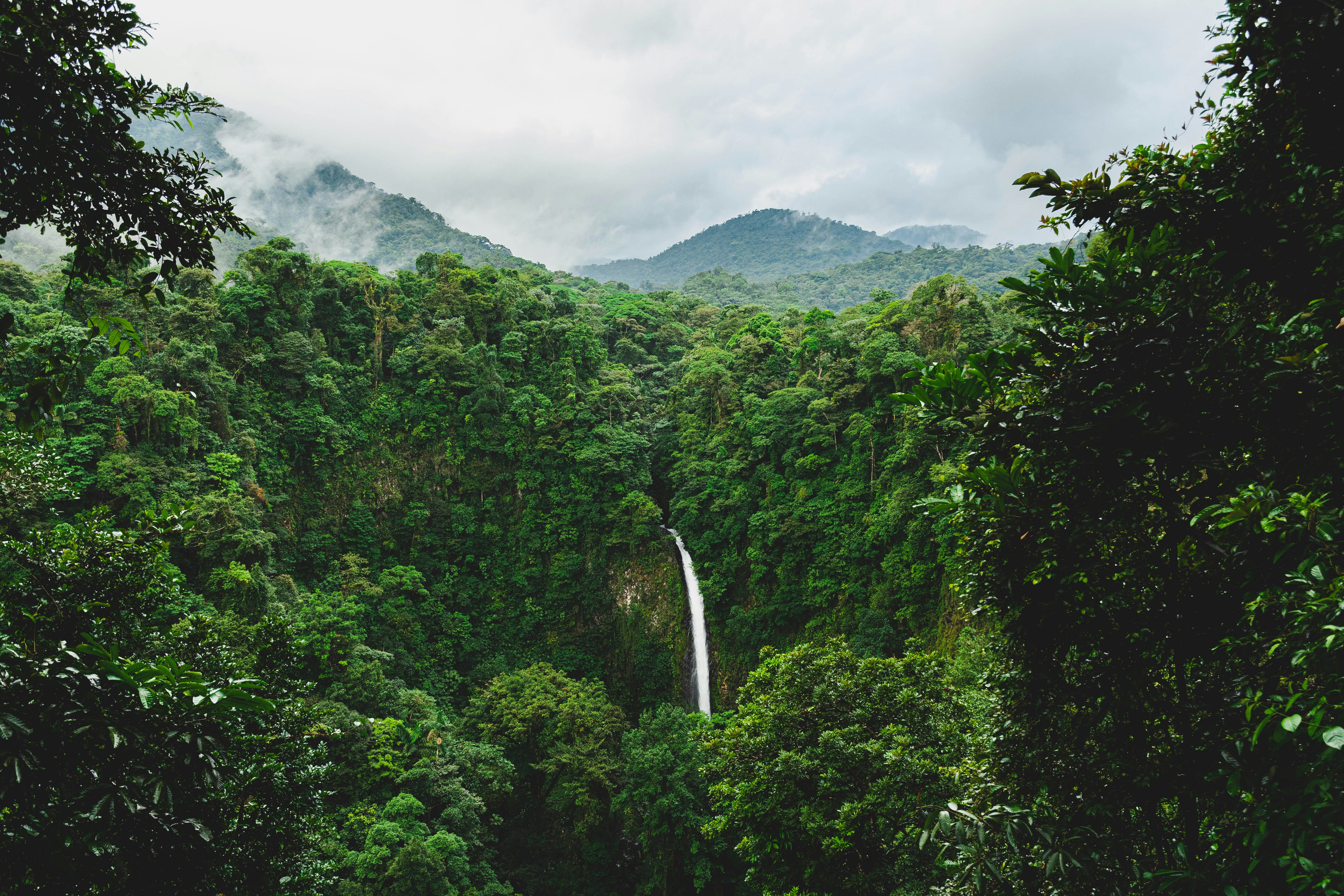
December through April marks Costa Rica's dry season, and what that means in practice: the Pacific coast — Guanacaste, the Nicoya Peninsula, Manuel Antonio — sees almost no rain, plenty of sunshine, and warm but not oppressive temperatures. December brings ideal conditions with cooler evenings, while January and February hit the sweet spot of warm days and clear skies. By March and April, temperatures rise but the weather remains predictably gorgeous.
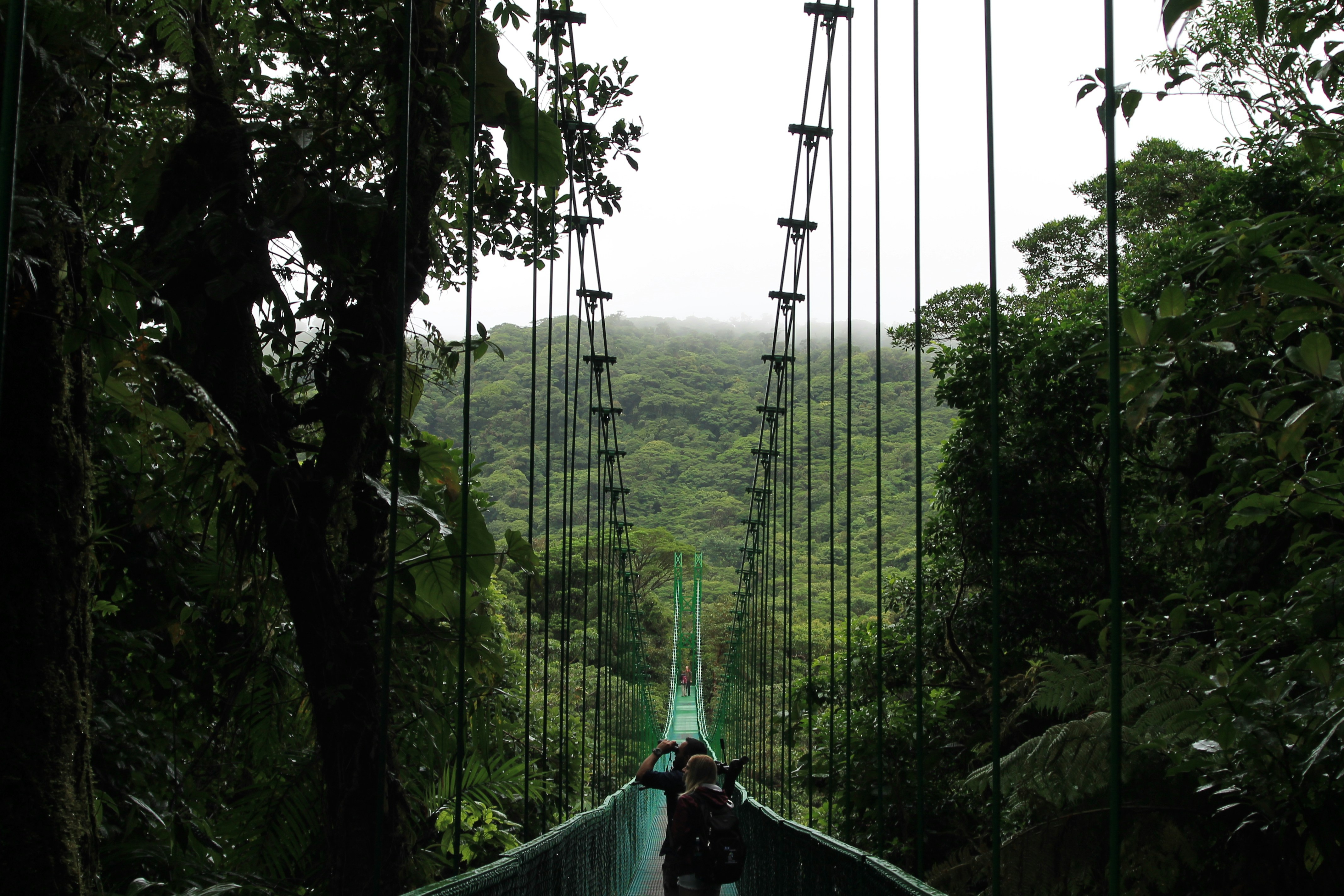
The Caribbean side still gets occasional showers year-round, but they're briefer during these months and the humidity is more manageable than usual. For travelers who want to do more than lounge on a beach, this window is ideal. The roads to Monteverde Cloud Forest and Arenal Volcano are in great shape, hiking trails are dry and manageable, and the canopy zip lines operate without weather delays. You can actually plan your days without contingency plans, which is rarer in Costa Rica than you might think.
Sea Turtle Nesting Season

Here's something most visitors don't realize: this dry season window overlaps perfectly with sea turtle activity. December through April is peak nesting season for Olive Ridley sea turtles along the Pacific coast, particularly at Ostional Wildlife Refuge. While the famous arribadas (mass nestings) are more common later in the season, early months offer quieter, more intimate experiences — watching individual turtles come ashore under the cover of darkness to lay their eggs.
On the Caribbean side, leatherback turtle season runs from March through May. Tortuguero National Park, accessible only by boat or plane, becomes a wildlife theater: turtles nesting on the beaches, monkeys and sloths in the canopy, and caimans gliding through the canals. It's one of those experiences that reminds you why Costa Rica takes conservation so seriously.
Where We'd Stay: Nayara Tented Camp
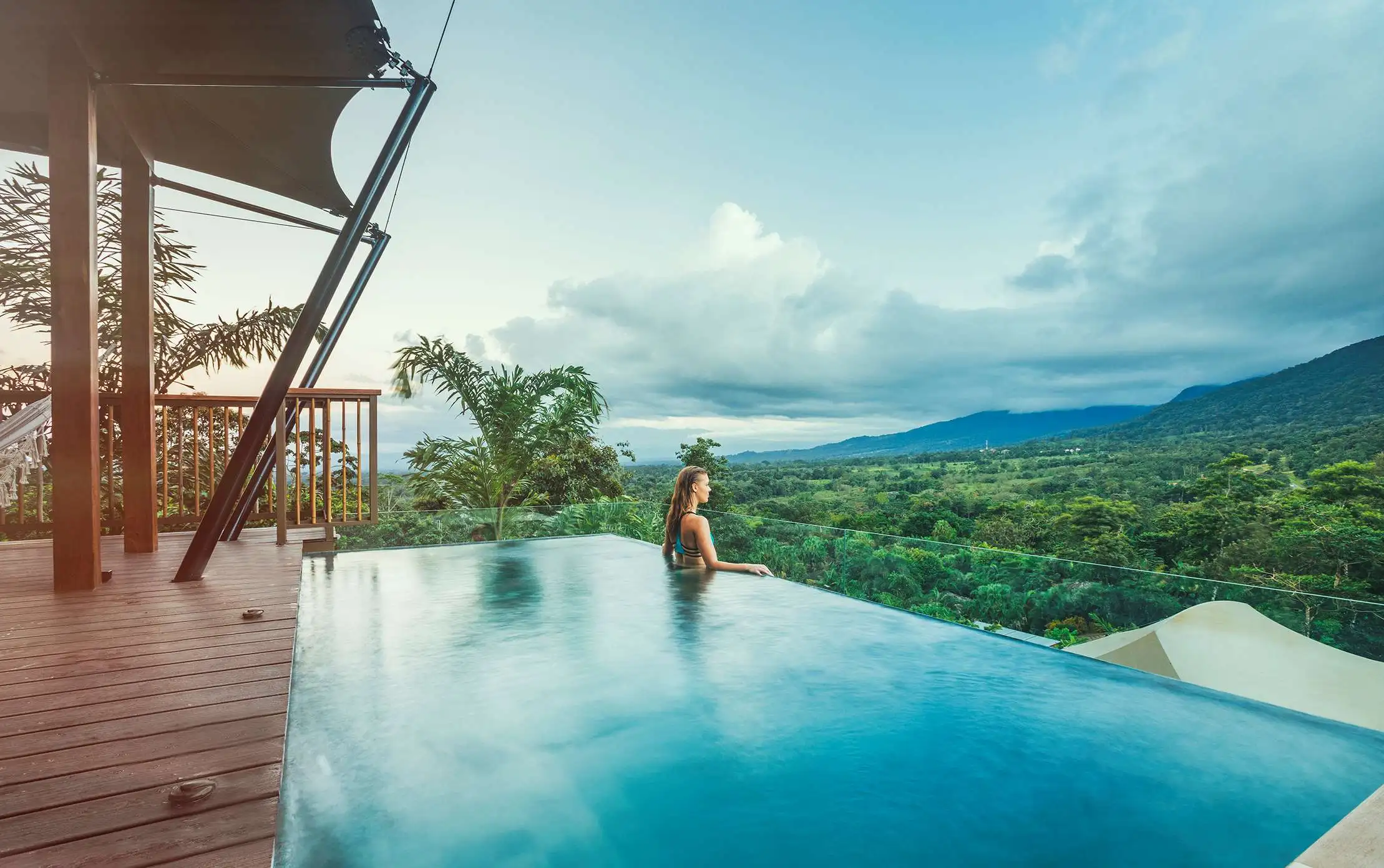
When it comes to Costa Rica properties that balance luxury with immersion in nature, Nayara Tented Camp near Arenal Volcano is hard to beat. The "tented" camp is a bit of a misnomer - these are spacious, beautifully appointed suites with plunge pools fed by natural hot springs, all set in the rainforest with views of the volcano.
Dry season is an excellent time to stay here because the skies are clearer, meaning better chances of seeing Arenal's perfect cone without cloud cover. The property also offers guided hikes, hanging bridge walks, and access to some of the country's best bird-watching. Through our Virtuoso partnership, you'll receive daily breakfast, a resort credit for spa treatments or adventure excursions, and complimentary room upgrades when available. It's the kind of place that makes you rethink what a jungle lodge can be.
The Dry Season Advantage for Wildlife
Dry season in Costa Rica doesn't mean the rainforest goes dormant — quite the opposite. With less water available, animals congregate around rivers, waterholes, and fruiting trees, making wildlife viewing dramatically easier. Scarlet macaws are more visible in the trees, howler monkeys are louder and more active in the mornings, and you're more likely to spot coatis, agoutis, and even jaguars near water sources.
Birdwatchers, in particular, should take note: these months are prime time for migratory species from North America mixing with Costa Rica's resident tropical birds. The result is spectacular diversity — over 900 species are recorded in Costa Rica, and this window gives you access to a significant portion of them. December and January offer the peak overlap of resident and migratory species.
Costa Rica during dry season isn't just about good weather. It's about timing your visit when the country is most cooperative, most vibrant, and most willing to show you why it's earned its reputation as one of the world's great nature destinations. Whether you're chasing adrenaline or tranquility, these months deliver both in equal measure.
Ready to explore Costa Rica at its best? Enquire with The Camel Collection and let us design your perfect Costa Rica escape.

.webp)


.svg)
.svg)
© 2025 Camel Collection
Hughenden, Rock Road, Rock, Cornwall, United Kingdom, PL27 6PW